
Weekend Update #263
Thank you for your continued support and engagement. Each week, we're sharing what companies we're researching and the what, the who and the how that we think makes the companies interesting and unique. This roundup is brought to you weekly by a group of interns, creative minds, artists and investors who believe that through best in class investing along with the democratization of financial education we can do great things together. Enjoy, Explore and Share.

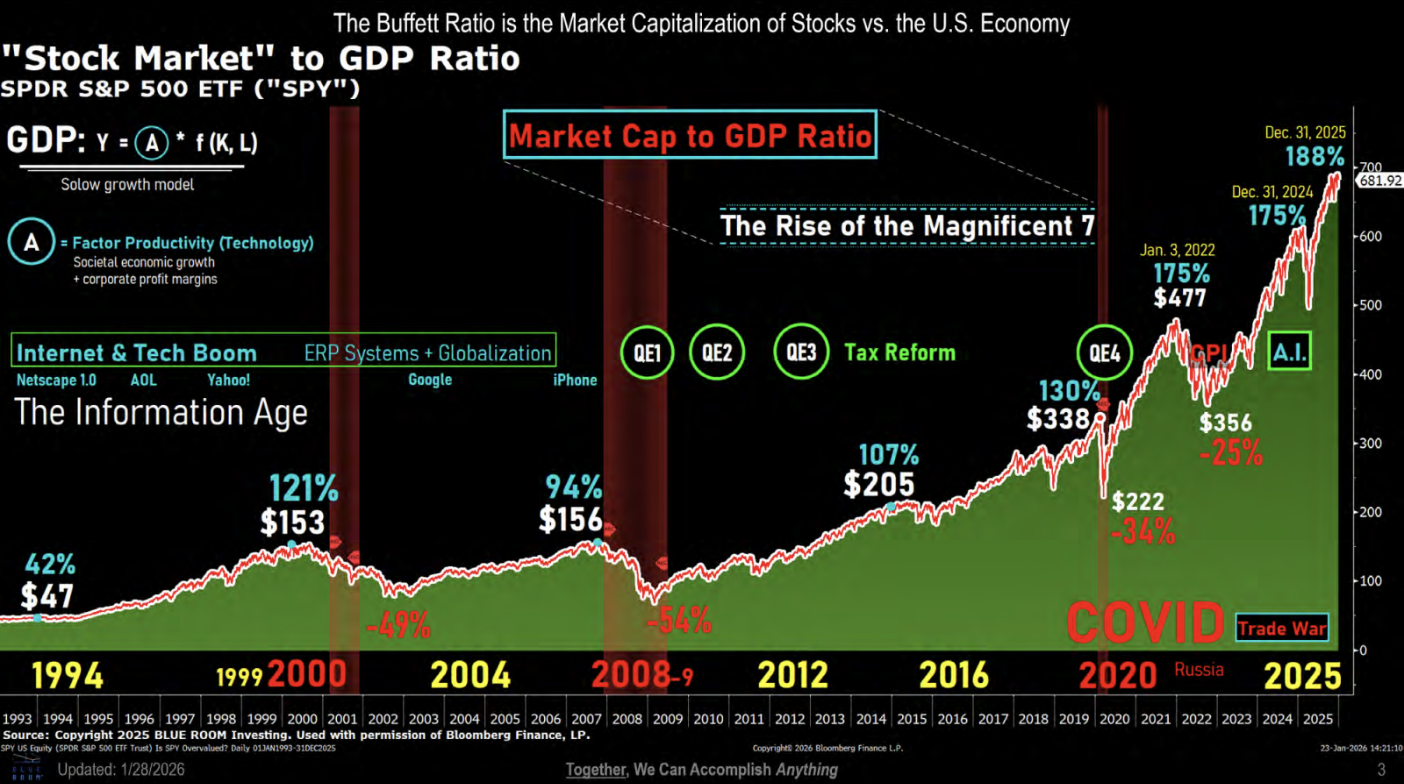
The S&P 500 briefly touched all-time highs on Wednesday, breaking the historic 7,000 milestone, before a selloff that put weekly equity performance relatively mixed. Magnificent 7 earnings from Apple, Microsoft, and Meta showed that the AI-linked data center boom remains in full swing. Despite a strong macroeconomic backdrop, investors remain closely focused on return on AI investment. Microsoft’s Q4 2025 +39% year-over-year cloud revenue growth slowing from 40% year-over-year in Q3, PPI-driven inflation worries, and President Trump’s nomination of Kevin Warsh for the next Chairman of the Federal Reserve all catalyzed a drawdown to close the week.
Kevin Warsh, who previously served as a member of the Federal Reserve Board of Governors from 2006–2011, has aligned with the president’s call for lower interest rates while calling for “regime change” at the Federal Reserve. His past term at the Federal Reserve leaned hawkish, questioning the long-term inflationary impacts of quantitative easing following the Global Financial Crisis. The expectation is for Warsh to lean slightly more dovish on cutting interest rates in the coming year while limiting the Fed’s balance sheet on QE implementation. Market participants are eagerly awaiting commentary from Kevin Warsh himself to frame his path forward on interest rates and inflation. In any case, Senator Thom Tillis, likely a key vote needed to confirm Kevin Warsh in the Senate, stated he would block any confirmation until the investigation into Jerome Powell is concluded.
Current Fed Chair Jerome Powell on Wednesday stated that middlemen remain committed to passing through tariff-related price increases to consumers, and the FOMC would need to remain attentive to upside risks to inflation. This puts Kevin Warsh in a delicate position to lead the Federal Reserve with confidence in the institution’s independence, find the appropriate level of interest rates to react to inflation or labor market risks, and also implement his vision for institutional reform.
Adding to the risks that Fed Chair Powell highlighted, the Producer Price Index in December rose 0.5% month-over-month and 3.0% year-over-year, compared to consensus estimates of 0.2% and 2.8%, respectively. The upward inflation pressure on producers has so far remained limited in its pass-through to consumer prices, but market participants fear the hot data could lead to pressure on interest rates and CPI this year. Prior to the PPI report, the FOMC on Wednesday afternoon announced its decision to maintain the current 3.50–3.75% federal funds rate. Initial Jobless Claims for the week ended January 24 were 209,000, a relatively low level that reinforces some signs of labor market stabilization compared to last year. However, Consumer Confidence in January fell to its lowest level since May 2014 as Americans grew more pessimistic about the labor market and business conditions.
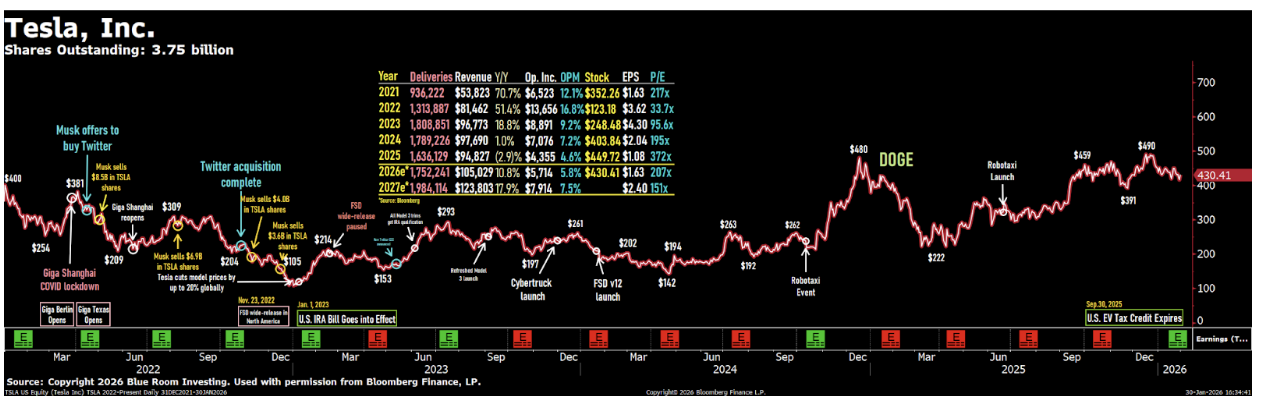
This week featured key earnings results, with Microsoft shares falling more than 10% after its report and Meta Platforms gaining more than 7% over the following two days. While Microsoft results surpassed consensus estimates, the selling pressure reflects investors' high bar for companies to demonstrate ROI relative to data center investment. Meta’s results provided proof that even early AI investments are accelerating advertiser demand for its products. Apple reported a significant beat driven by strong iPhone sales in the quarter, but a warning that rising memory costs would limit its gross margin held back its share price reaction. Tesla shares were roughly unchanged over two days after vehicle sales missed expectations and the company announced it would discontinue Model S and Model X production. However, reports that SpaceX is considering a merger with Tesla along with the anticipated commercial release of Tesla Optimus robots in 2027 helped support shares. Health insurers like UnitedHealth and Humana saw share prices fall by ~20% this week following the Centers for Medicare & Medicaid Services’ proposal to raise 2027 Medicare Advantage by 0.09% — far below the ~5% expectations. On Friday, gold prices fell 8% and silver prices fell 26% after the nomination of Kevin Warsh helped to strengthen the U.S. dollar, but these big swings follow significant appreciation over the past 2–3 years.
Friday’s Close (Weekly Performance)
S&P 500 6,939.03 (+0.34%)
Nasdaq 23,461.82 (-0.17%)
Dow Jones 23,461.82 (-0.42%)
Thank you Blue Room Senior Analyst JARED FENLEY.
Federal Reserve Chairman Jerome Powell
Good afternoon. My colleagues and I remain squarely focused on achieving our dual mandate goals of maximum employment and stable prices for the benefit of the American people. The U.S. economy expanded at a solid pace last year and is coming into 2026 on a firm footing. While job gains have remained low, the unemployment rate has shown some signs of stabilization, and inflation remains somewhat elevated.
In support of our goals, today, the Federal Open Market Committee decided to leave our policy rate unchanged. Having lowered our policy rate by 75 basis points over the course of our previous three meetings, we see the current stance of monetary policy as appropriate to promote progress toward both our maximum employment and 2 percent inflation goals. I will have more to say about monetary policy after briefly reviewing economic developments.
Available indicators suggest that economic activity has been expanding at a solid pace. Consumer spending has been resilient, and business fixed investment has continued to expand. In contrast, activity in the housing sector has remained weak. The temporary shutdown of the federal government likely weighed on economic activity last quarter, but these effects should be reversed as the reopening boosts growth this quarter.
In the labor market, indicators suggest that conditions may be stabilizing after a period of gradual softening. The unemployment rate was 4.4 percent in December and has changed little in recent months. Job gains have remained low. Total nonfarm payrolls declined at an average pace of 22,000 per month over the last three months; excluding government employment, private payrolls rose at an average pace of 29,000 per month. A good part of the slowing in the pace of job growth over the past year reflects a decline in the growth of the labor force, due to lower immigration and labor force participation, though labor demand has clearly softened as well. Other indicators, including openings, layoffs, hiring, and nominal wage growth, show little change in recent months.
Inflation has eased significantly from its highs in mid-2022 but remains somewhat elevated relative to our 2 percent longer-run goal. Estimates based on the Consumer Price Index indicate that total PCE prices rose 2.9 percent over the 12 months ending in December and that, excluding the volatile food and energy categories, core PCE prices rose 3.0 percent. These elevated readings largely reflect inflation in the goods sector, which has been boosted by the effects of tariffs. In contrast, disinflation appears to be continuing in the services sector. Near term measures of inflation expectations have declined from last year’s peaks, as reflected in both market- and survey-based measures. Most measures of longer-term expectations remain consistent with our 2 percent inflation goal.

Trump–nomics: The Rorschach Package: What Do You See?
__________ _________ ________ ________
Handcrafted Economic Charts Made In Bloomberg
+ The Federal Reserve (FOMC Transcript Included)
+ Cost of Capital: Fed Funds – 10 Year Treasury
+ Labor Market: Soft Data – Hard Data
__________ _________ ________ ________
There are a few canaries, including:
– (1) Rising SOFR volatility
– (2) Japanese Yen intervention
– (3) Bitcoin Liquidation susceptibility
__________ _________ ________ ________

Executive Summary
Tesla generated $24.9 billion in Q4 revenue, down -3.1% Y/Y, modestly missing consensus of $25.1 billion, with Automotive revenue declining -10.6% Y/Y to $17.7 billion while Energy and Services & Other grew +25.4% and +18.4% Y/Y, respectively. Auto gross margin (ex-regulatory credits) was a key upside at 17.9%, up 432 bps Y/Y and well ahead of consensus expectations, reflecting continued cost efficiencies and mix improvements, with Energy and Services margins also improving Y/Y. Despite stronger margins, operating income fell to $1.4 billion (-11% Y/Y) due to elevated OpEx, particularly across R&D and SG&A, though results came in above consensus, while net income declined to $856 million (-60% Y/Y). Adjusted EPS of $0.50 was down -16% Y/Y but beat consensus by ~12%, highlighting ongoing margin resilience and segment diversification amid softer Automotive revenue and higher operating costs. Looking ahead to 2026, Tesla outlined a strategic pivot toward an autonomy- and robotics-led future, reframing its mission around “amazing abundance” driven by AI, autonomy, energy, and humanoid robots. While near-term margins and cash flow remain under pressure, management positioned 2026 as a foundational year to scale autonomy, Optimus, energy, and vertically integrated AI and chip infrastructure.
Elon Musk — Chief Executive Officer
So, we've updated the Tesla mission to amazing abundance, and this is intended to send a message of optimism about the future. I think we're most likely headed to an exciting, amazing era of abundance, and I think with the continued growth of AI and robotics, I think we actually are headed to a future of universal high income -- not universal basic income, but universal high income.
I mean, there's going to be a lot of change along the way, but that is what I see as the most likely outcome. So I think that it makes sense to update Tesla's mission to reflect that goal. And obviously, along that way, we're going to keep improving safety, driving down the cost of goods, and getting people access to anything they need without compromise, and still making sure that the environment is great, nature is great, and people can have whatever they want, which seems like probably the best future.
I'm open to other ideas, but it sounds like if you could say, what is the best future you could possibly imagine, I guess it would be that everyone can have whatever they want, including amazing medical care. And -- but we still keep the beauty of nature and earth. I think that's probably the best outcome, and we're seeing, obviously, the first steps along that way this year for Tesla, first major steps, as we increase vehicle autonomy and begin to produce Optimus robots at scale.
We're making very, very big investments. So this is going to be a very big CapEx year, as Vaibhav will get into, but that is deliberate because we're making big investments for an epic future. So I think all these investments make a lot of sense. We'll continue to make sure that when we do spend capital, it is spent very efficiently. But it's a lot of things, major investments in batteries and the entire supply chain of batteries. So we're also going to be significant manufacturers of solar cells, and we're making massive investments in AI chips. So -- but I think these all make a ton of strategic sense.
And then, I guess, I have like one -- I guess it's not exactly bad news, but it's time to basically bring the Model S and X programs to an end with an honorable discharge, because we're really moving into a future that is based on autonomy. And so, if you're interested in buying a Model S and X, now would be the time to order it because we expect to wind down S and X production next quarter and basically start production of Model S and X next quarter.

Haviv Ilan – President, CEO & Chairman
"The overall semiconductor market recovery is continuing, and we are well positioned with inventory and capacity to meet immediate customer demand."
Haviv Ilan
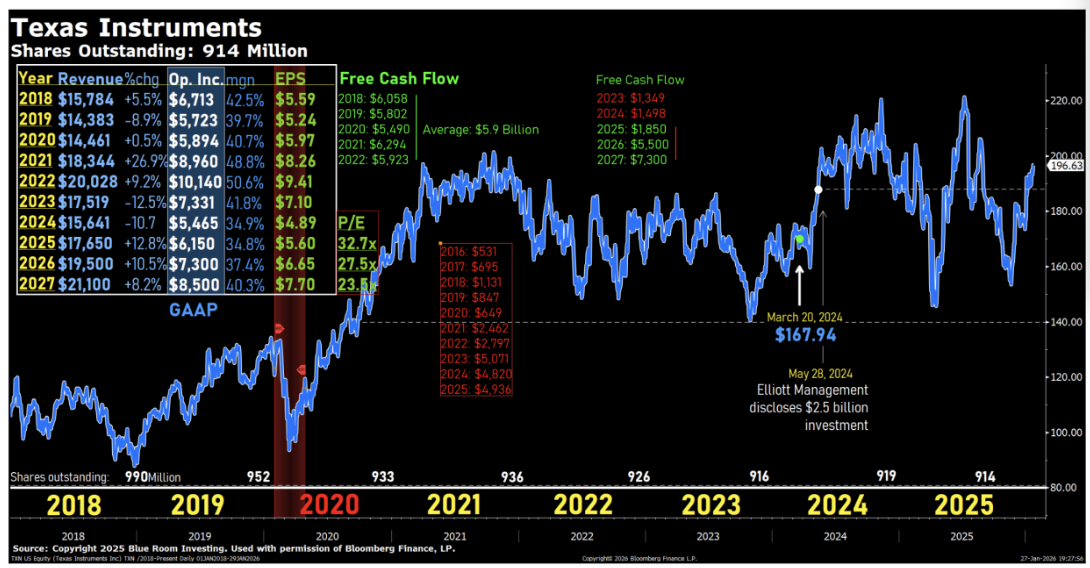
Let me start with a quick overview of the fourth quarter. Revenue came in about as expected at $4.4 billion, a decrease of 7% sequentially and an increase of 10% from the same quarter a year ago. Analog revenue grew 14% year–over–year, Embedded Processing grew 8%, and our Other segment declined from the year-ago quarter. The overall semiconductor market recovery is continuing, and we are well positioned with inventory and capacity to meet immediate customer demand.
Before I walk through our results, I would like to share an update we have made to our end markets. To better reflect the growth opportunities we see for our Analog and Embedded products, we reorganized our end markets to include Data Center which includes sectors related to data center compute, data center networking and rack power and thermal management. As such, our end markets are now Industrial, Automotive, Data Center, Personal
Electronics and Communications Equipment.
With that as a backdrop, I will now provide some insight into our fourth quarter revenue by end market.
● First, the Industrial market was up high teens year–on–year with recovery continuing broadly across sectors and was down mid-single digits sequentially.
● The Automotive market increased upper single digits year-on-year and was down low single digits sequentially.
● Data Center grew around 70% year–on–year and mid-single digits sequentially.
● Personal electronics declined upper teens year–on–year and mid-teens sequentially.
● Lastly, communications equipment declined low single digits year-on-year and mid-teens sequentially.

Mark Zuckerberg — Chief Executive Officer
All right, hey everyone. Thanks for joining us.
We ended 2025 strong with more than 3.5 billion people now using at least one of our apps every day. That includes more than 2 billion daily actives each on Facebook and WhatsApp and just shy of that on Instagram. Our business also performed very well thanks to record-breaking holiday demand and AI-driven performance gains. We are now seeing a major AI acceleration.
I expect 2026 to be a year where this wave accelerates even further on several fronts. We're starting to see agents really work. This will unlock the ability to build completely new products and transform how we work.
In '25, we rebuilt the foundations of our AI program. Over the coming months, we're going to start shipping our new models and products. I expect our first models will be good, but more importantly, we'll show the rapid trajectory that we're on. And then I expect us to steadily push the frontier over the course of the year as we continue to release new models. I'm very excited about the products that we're building.
Our vision is building personal superintelligence. We're starting to see the promise of AI that understands our personal context, including our history, our interests, our content, and our relationships. A lot of what makes agents valuable is the unique context that they can see. And we believe that Meta will be able to provide a uniquely personal experience.
We're also working on merging LLMs with the recommendation systems that power Facebook, Instagram Threads, and our ad system. Our world-class recommendation systems are already driving meaningful growth across our apps and ads business, but we think that the current systems are primitive compared to what will be possible soon.
Today, our systems help people stay in touch with friends, understand the world, and find interesting and entertaining content. But soon, we'll be able to understand people's unique personal goals and tailor feeds to show each person content that helps them improve their lives in the ways that they want.
This also has implications for commerce. Our ads today help businesses find just the right, very specific people who are interested in their products. New agentic shopping tools will allow people to find just the right, very specific set of products from the businesses in our catalog. We're focused on making these experiences work across both our feeds and across business messaging, significantly increasing the capabilities of WhatsApp over time.
New kinds of content will soon be possible as well. People want to express themselves and experience the world in the most immersive and interactive way as possible. We started with text, and then moved to photos when we got phones with cameras, and then moved to video when mobile networks got fast enough. Soon, we'll see an explosion of new media formats that are more immersive and interactive, and only possible because of advances in AI. Our feeds will become more interactive overall. Today, our apps feel like algorithms that recommend content. Soon, you'll open our apps and you'll have an AI that understands you and also happens to be able to show you great content or even generate great personalized content for you.

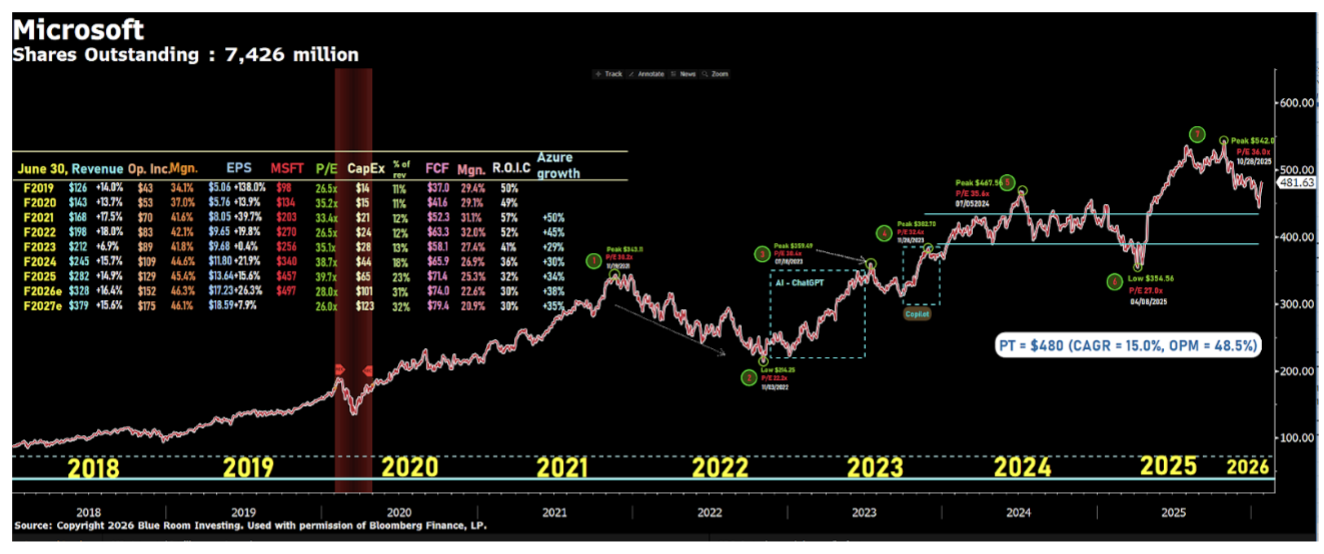
Amy Hood – Microsoft Chief Financial Officer
"Capital expenditures were $37.5 billion, and this quarter, roughly two thirds of our capex was on short–lived assets, primarily GPUs and CPUs. Our customer demand continues to exceed our supply. Therefore, we must balance the need to have our incoming supply better meet growing Azure demand with expanding first–party AI usage across services like M365 Copilot and Github Copilot, increasing allocations to Research & Development teams to accelerate product innovation, and continued replacement of end–of–life server and networking equipment. The remaining spend was for long-lived assets that will support monetization for the next 15 years and beyond. This quarter, total finance leases were $6.7 billion and were primarily for large datacenter sites. And cash paid for Property, Plant, and Equipment was $29.9 billion."
"Cash flow from operations was $35.8 billion, up 60% driven by strong cloud billings and collections. And free cash flow was $5.9 billion and decreased sequentially reflecting the higher cash capital expenditures from a lower mix of finance leases. And finally, we returned $12.7 billion to shareholders through dividends and share repurchases, an increase of 32% year–over–year."

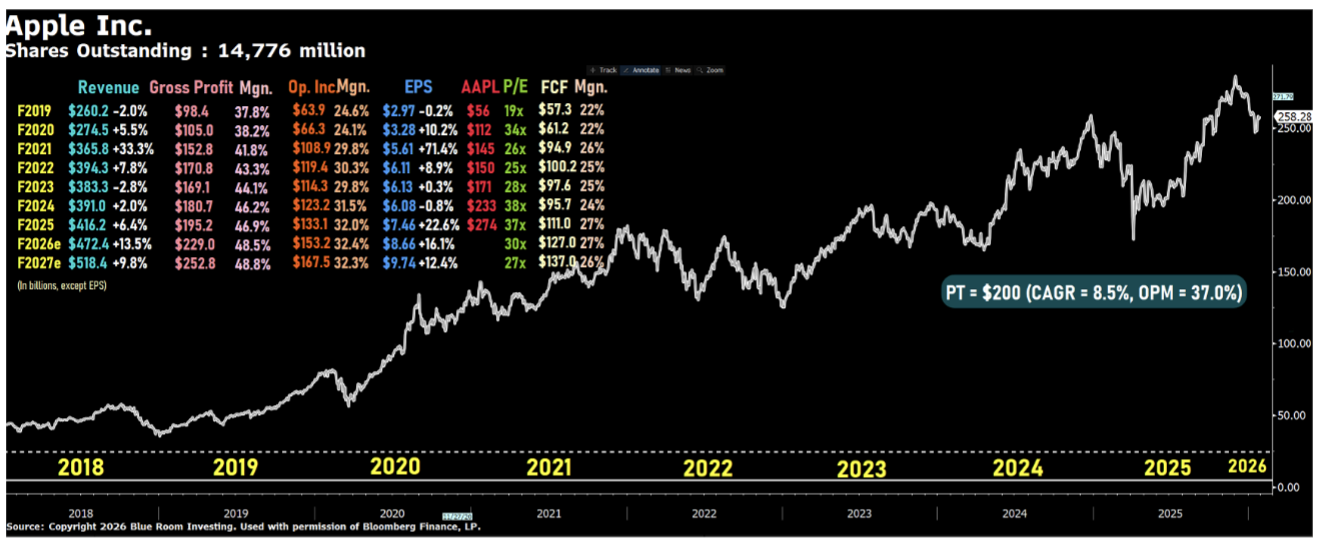
Tim Cook – CEO & Director
"Building on our efforts in the AI space, we are also collaborating with Google to develop the next generation of Apple foundation models. This will help power future Apple Intelligence features, including a more personalized Siri coming this year. We're incredibly excited for what's to come with so many new experiences to unlock."




10% OF ALL BLUE ROOM REVENUES GO DIRECTLY TO FUND OUR NON PROFIT TOGETHERISM.
WE CAN ACCOMPLISH ANYTHING TOGETHER.
These materials do not purport to be all-inclusive or to contain all the information that a prospective investor may desire in considering an investment. These materials are intended merely for preliminary discussion only and may not be relied upon for making any investment decision. Any discussion or information contained in this presentation does not serve as a receipt of, or as a substitute for, personalized investment advice from Blueroom or your advisor.
This publication does not constitute an offer to sell or a solicitation to buy any securities in any fund, market sector, strategy or any other product. Investing is speculative and involves substantial risks (including, the risk of loss of the investor’s entire investment). Past performance is not indicative of future results, and there can be no assurance that the future performance of any specific investment, investment strategy, or product will be profitable.
For more information about us and our general disclosures contact us directly.